

What is TPD Compliance? Everything European Vapers Need to Know About the 2ml Capacity Rule
Master EU TPD compliance and the 2ml capacity limit. Explore how advanced multi-chamber and modular vape hardware deliver legal high-puff satisfaction.
European TPD compliance dictates a strict 2ml maximum capacity for pre-filled vape tanks, forcing advanced hardware engineers to develop multi-chamber and modular pod systems that legally deliver high-puff experiences without violating regional volume limits. This regulatory framework completely reshaped hardware development, pushing the industry past basic glass extensions and into an era of sophisticated, interlocking fluid isolation technologies for adult users navigating their tobacco transition.
Decoding TPD Compliance and the 2ml Vape Tank Limit
Implemented widely across Europe and recognized in the UK through the Tobacco and Related Products Regulations (TRPR), the European Tobacco Products Directive establishes rigid quality control and safety benchmarks for smoking alternatives. Among its most defining restrictions is the limitation of nicotine-containing e-liquid bottles to 10ml and the enforcement of a 2ml maximum tank capacity for all closed and refillable atomization hardware.
While the regulation successfully mandated leakproof designs and correct warning labels, the strict volume limit introduced a significant user friction point: frequent and inconvenient refilling. In response, early hardware iterations attempted workarounds like temporary tank extension kits or utilizing slimmer coil architectures to squeeze an extra 1.5ml of liquid into existing tanks. However, these methods often compromised structural integrity, leading modern engineers to completely rethink fluid storage.
The Engineering Physics of Multi-Chamber and Modular Pod Systems
To legally expand fluid volumes for prolonged usage, the industry shifted toward architectural modularity rather than simple dimensional enlargement. For a comprehensive look at how these internal structures operate, read our ultimate guide to modular vape architectures. By segmenting the total e-liquid payload into strictly regulated micro-tanks, hardware designers successfully mapped a legally sound pathway for high-capacity harm reduction tools.
Multi-Chamber Airflow Routing Mechanics
The operational core of compliant high-puff devices relies on precision airflow segregation. Instead of drawing from a single massive reservoir, advanced modular technologies utilize multi-channeled physical airways that direct incoming air exclusively through the currently active chamber. This prevents dormant compartments from experiencing unintended thermal exposure, keeping the resting e-liquid chemically stable.
Stackable Pod Architecture and Fluid Isolation
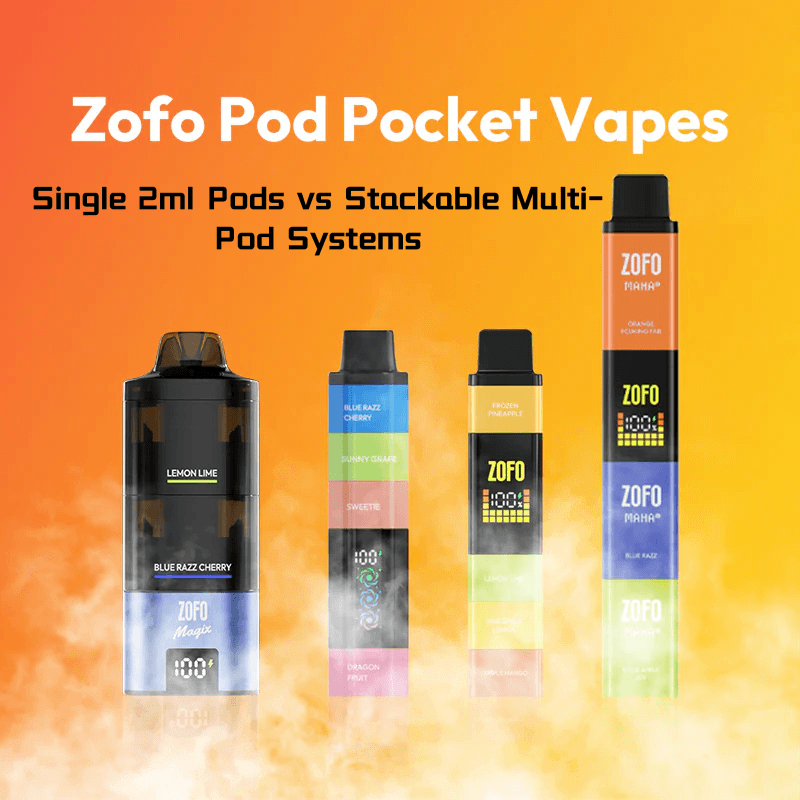
Instead of a continuous unibody tank, stackable pod architecture utilizes separate pre-filled segments that lock into a centralized power unit. Because each independent cartridge physically tops out at the legal 2ml volume threshold, the combined system legally passes compliance checks. High-grade silicone gaskets and magnetic junctions ensure absolute fluid isolation between these stacked segments.
Independent Atomization and Grid Coil Integration
When connecting multiple 2ml chambers, maintaining consistent heating is critical. Premium hardware utilizes independent organic mesh coils dedicated to each specific pod segment. This grid coil integration ensures that the active heating element only vaporizes the liquid within its immediate 2ml boundary, guaranteeing a pure and consistent aerosol output throughout the switching process.
How High-Puff Hardware Adapts to European Regulations
The evolution of compliant hardware demonstrates a clear trajectory from legally ambiguous modifications to purposefully engineered compliance. Users seeking longer sessions previously relied on aftermarket components, but today’s top-tier manufacturing solutions natively integrate volume expansion within the boundaries of the law.
| Hardware Configuration | Capacity Mechanism | TPD Compliance Status | Leak Resistance |
|---|---|---|---|
| Standard Single Tank | Fixed 2ml glass reservoir | 100% Compliant | High |
| Legacy Extension Kits | Expanded chimney and wider glass | Legally ambiguous | Moderate (Prone to seal failure) |
| Slimmer Coil Adapters | Reduced coil mass to maximize space | Conditionally compliant | Moderate |
| Modular Stackable Pods | Interlocking N x 2ml isolated chambers | 100% Compliant | Absolute (Magnetic separation) |
Overcoming Flavor Saturation in Regulatory Fluid Limits
Beyond legal adherence, dividing a large e-liquid payload into smaller, independent 2ml pods solves a profound biological challenge: olfactory adaptation, commonly known as flavor fatigue. When an adult user is restricted to a massive, single-flavor tank, continuous exposure to identical aromatic profiles saturates the olfactory receptors, severely dulling the perceived taste and diminishing the satisfaction of the smoking alternative.
Physical pod segmentation naturally disrupts this sensory flattening. Because advanced modular systems house distinct formulations in separated fluid compartments, users can effortlessly alternate between contrasting profiles. This constant rotation forces the taste receptors to reset, preserving taste profile purity and ensuring high sensory engagement across consecutive sessions.
Consumer Inspection Checklist for Legal High-Capacity Hardware
Before investing in modern high-capacity smoking alternatives, adult users must verify that the hardware meets stringent regional guidelines. Navigating alternative choices requires a basic understanding of hardware anatomy to ensure full compliance and safety.
Evaluating a multi-tank setup involves checking the following crucial indicators:
- Inspect the external housing for clear structural dividers that prove the liquid is split into distinct sub-tanks.
- Check the primary hardware and packaging for official CE and RoHS certification markings, confirming electronic safety.
- Ensure the manufacturer provides accessible emissions testing scan codes or verified batch numbers on the label.
Verifying Individual 2ml Chamber Partitions
A compliant multi-tank system must physically separate its e-liquid. Users should visually confirm that there are impenetrable physical barriers between compartments. If liquid can freely flow between a 2ml section and another section within the same sealed unit, the device violates compliance rules.
Identifying Genuine Regulatory Compliance Safety Stamps
Authentic hardware intended for the European market will carry standard regulatory iconography. Look for the CE mark, which indicates conformity with health, safety, and environmental protection standards, alongside the crossed-out wheelie bin symbol denoting proper electronic waste disposal protocols.
Reviewing Verified Laboratory Testing Labels
Reputable hardware architectures undergo rigorous quality control. Adult consumers should look for packaging that explicitly mentions toxicological emissions testing. Verifiable laboratory labels guarantee that the internal organic mesh coils and e-liquids have been tested against heavy metal leaching and harmful chemical degradation.
FAQ (Frequently Asked Questions)
What does TPD compliant mean for European vapers?
It guarantees that vaping hardware and e-liquids meet strict EU safety, quality, and packaging standards, prominently including the 2ml maximum tank capacity and 10ml nicotine bottle limit, alongside mandated leakproof engineering.
How can a vape device legally offer high puffs under the 2ml rule?
Advanced hardware engineering utilizes modular architectures, linking multiple independent 2ml fluid reservoirs onto a single reusable battery. This technically remains compliant with per-tank limits while multiplying total overall capacity.
Are modular stackable pods legally permitted in the UK and EU?
Yes. Provided each physical pod segment operates as an isolated 2ml compartment without internal fluid bridges, they perfectly align with existing TRPR and EU regulatory thresholds.
Can I use different flavors simultaneously in a compliant multi-tank setup?
Yes. Advanced modular technologies allow users to swap distinct 2ml pods on demand, maintaining absolute flavor purity and preventing chemical cross-contamination across isolated chambers.
How do separate fluid compartments protect vapor quality?
By confining e-liquids to dedicated organic mesh coils, separate compartments prevent thermal degradation and flavor saturation, ensuring a crisp, uncontaminated draw throughout your daily tobacco transition.
Are you a commercial distributor looking for industrial-grade hardware solutions? Explore our vape hardware OEM/ODM customization services to future-proof your retail inventory.
This article is provided on an "as-is" informational basis without warranties of accuracy or completeness. It is not professional advice. Adult users should verify compliance criteria against official legal frameworks. The publisher is not liable for any direct or indirect consequences resulting from the practical application of this content.
Recent Articles
Smoking vs. Vaping Cost Report: Florida