



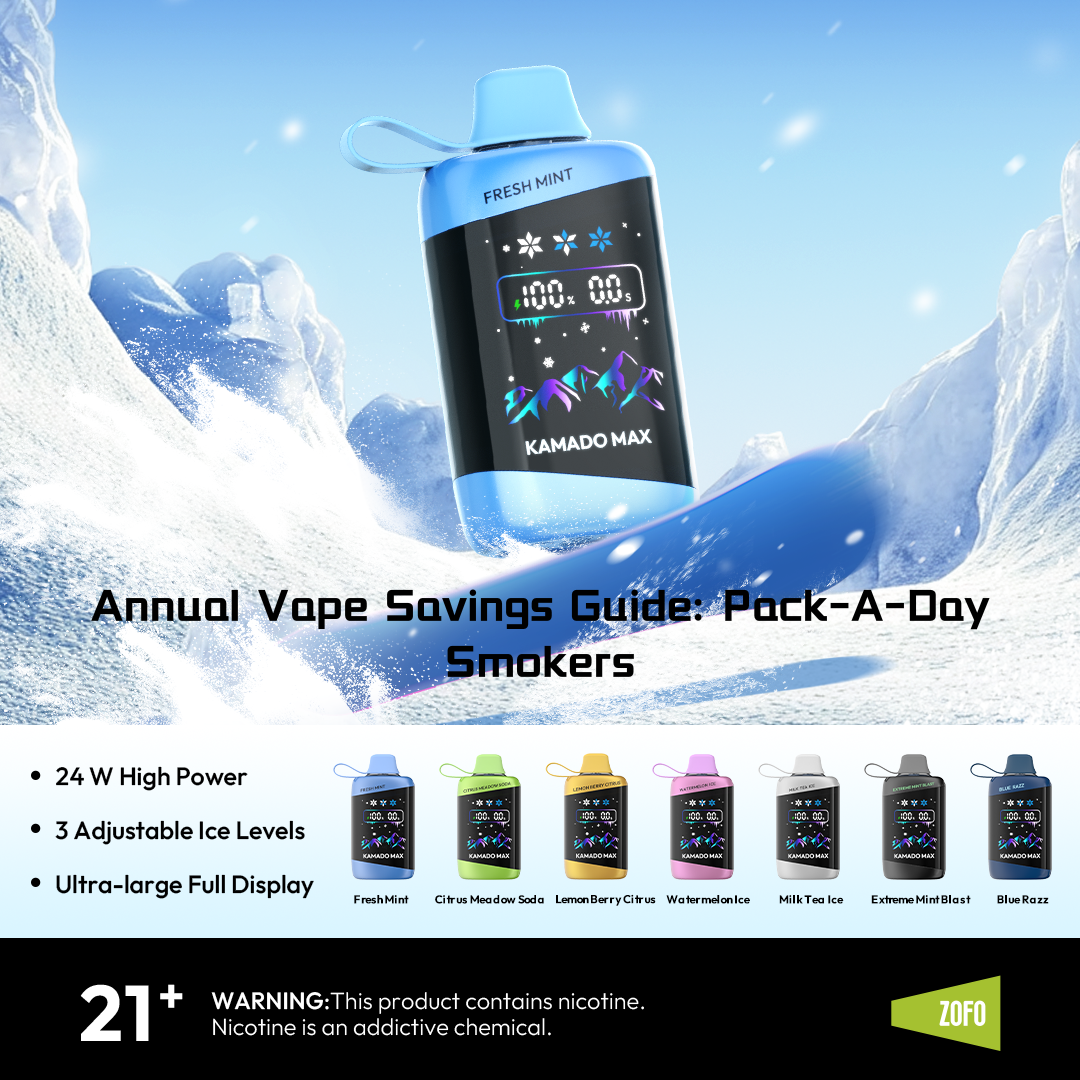
Monthly Vaping Cost Savings Guide
Explore your potential monthly vaping cost savings. Analyze ongoing expenses for disposable vapes, pod systems, and open setups against smoking.
Introduction
When individuals assess their personal finances, recurring monthly expenses often receive the closest scrutiny. Unlike large annual bills, monthly outlays for everyday habits directly impact short-term budgeting, disposable income, and immediate financial flexibility. For those examining the financial aspect of their habits, looking at potential monthly vaping cost savings offers a clear, highly digestible view of how day-to-day choices accumulate over a standard four-week billing cycle.
The baseline costs associated with traditional tobacco products and alternative devices are fundamentally different. Traditional smoking follows a rigid, transactional cost structure where expenses accumulate pack by pack. In contrast, electronic setups involve varying combinations of hardware investments and consumable parts. Because these expenses depend heavily on device architecture, regional excise taxes, retail pricing, and personal consumption rates, understanding how these variables interact is key to a realistic financial comparison. This guide breaks down the financial components of different configurations to clarify the monthly cost differences between smoking and vaping.
What Does Monthly Vape Savings Mean?
In financial terms, a consumer's monthly vape savings represents the net difference between their baseline monthly smoking cost and their total estimated expenditures on an electronic alternative over the same 30-day period. However, calculating this figure requires a more nuanced approach than simply subtracting one retail transaction from another.
A critical factor that users must consider when looking at vaping cost savings is the divergence between first-month startup costs and ongoing operational costs:
- First-Month Costs: The initial period frequently includes an upfront hardware purchase, such as a rechargeable base device, a starter kit, or initial accessories.
- Ongoing Monthly Costs: Subsequent months typically incur lower expenses, as spending shifts primarily to consumable elements like replacement pods, e-liquid bottles, or heating coils.
- Product Differentiation: The specific type of device selected plays a dominant role in shaping this cost curve. A single-use device follows a highly predictable, linear replacement schedule, while an open system requires higher initial hardware spending but results in lower recurring costs later.
Monthly Smoking Cost: The Baseline
To establish a clear point of comparison, it is necessary to determine the typical monthly expenditure associated with a traditional tobacco routine. Because smoking costs are driven entirely by immediate consumption, the cumulative total escalates steadily over a 30-day window.
The basic framework for determining this baseline relies on a straightforward calculation:
- Monthly Smoking Cost = Daily Cigarette Cost × 30
For an individual maintaining a consistent one-pack-a-day routine, the equation aligns directly with local retail pack pricing:
- Pack-A-Day Monthly Smoking Cost = Cigarette Pack Price × 30
Based on available market data and regional pricing variations, a standard pack-a-day habit may cost around $300 to $450 per month. This estimated range fluctuates heavily based on state or municipal tobacco taxes, brand positioning, and regional retail margins. In high-tariff metropolitan areas, the baseline monthly smoking cost can easily surpass these estimates, while areas with minimal excise levies may sit toward the lower end of the spectrum.
Monthly Vaping Cost by Device Type
When evaluating electronic alternatives, the monthly financial profile shifts from a uniform daily purchase to a multi-tiered expense structure. The financial commitment varies significantly depending on the underlying design and technical requirements of the chosen device.
The table below outlines typical estimated costs associated with different hardware setups, tracking both initial investments and recurring consumables over a standard month:
| Setup Type | Initial Hardware | Monthly Consumables | Typical Monthly Cost |
|---|---|---|---|
| Traditional Cigarettes | $0 | $300 - $450 | $300 - $450 |
| Disposable Vapes | $15 - $25 | $75 - $120 | $90 - $145 |
| Prefilled Pod Systems | $15 - $30 | $40 - $60 | $55 - $90 |
| Refillable Vape Pen / Pod | $25 - $40 | $20 - $30 | $45 - $70 |
| Advanced Box Mods | $40 - $80 | $25 - $40 | $65 - $120 |
Note: The data points listed above represent calculated market estimates and do not reflect absolute, guaranteed pricing. Initial hardware choices can make the first month more expensive, whereas ongoing monthly expenditures may decrease once the basic equipment is acquired. The ultimate cost pattern depends on individual consumption behavior, regional sales taxes, product choices, and component replacement frequencies.
For individuals seeking maximum simplicity without the need for manual maintenance, specialized disposable vape products offer a straightforward, accessible entry point, though their long-term cost structure differs from modular alternatives.
First-Month Cost vs. Ongoing Monthly Cost
A common oversight when evaluating a budget shift is focusing exclusively on the initial checkout total. To understand the true economic trajectory of an electronic device, consumers must separate the immediate entry cost from long-term operational upkeep.
Different hardware categories exhibit highly contrasting financial patterns over time:
| Device Type | First-Month Cost Pattern | Ongoing Cost Pattern |
|---|---|---|
| Disposable Vapes | Low setup costs; repeated individual purchases required. | Driven entirely by frequent hardware replacement cycles. |
| Prefilled Pods | Includes a starter kit purchase plus an initial pod allotment. | Driven by regular replacement pod cartridge purchases. |
| Refillable Pods | Moderate initial hardware purchase along with separate e-liquid. | Lower recurring costs, limited to e-liquid and replacement coils. |
| Advanced Mods | Higher upfront investment for advanced hardware and cells. | Focused on bulk consumables and individualized maintenance parts. |
Single-use options feature minimal upfront costs but require complete device replacement once the built-in e-liquid or battery is exhausted. Conversely, choosing option-rich pod system vapes requires a dedicated hardware purchase during the first month, but subsequent billing cycles benefit from a lower, more stable cost pattern focused solely on sealed pod cartridges.
Estimated Monthly Vape Savings Comparison
To illustrate how these dynamics translate into potential financial differences, different alternative configurations can be cross-referenced against two separate monthly smoking baselines.
The matrix below contrasts various electronic configurations against a moderate $300 monthly smoking baseline and a higher-tier $450 monthly smoking baseline:
| Method | Estimated Monthly Cost | Estimated Difference vs. $300 Smoking Month | Estimated Difference vs. $450 Smoking Month |
|---|---|---|---|
| Traditional Cigarettes | $300 - $450 | Baseline | Baseline |
| Disposable Vapes | $90 - $145 | $155 - $210 lower | $305 - $360 lower |
| Prefilled Pod Systems | $55 - $90 | $210 - $245 lower | $360 - $395 lower |
| Refillable Vape Pen / Pod | $45 - $70 | $230 - $255 lower | $380 - $405 lower |
| Advanced Box Mods | $65 - $120 | $180 - $235 lower | $330 - $385 lower |
Important Clarification: The figures compiled above are illustrative estimates derived from general consumer averages. Actual vaping cost savings are highly subjective and can vary significantly based on specific product selections, regional luxury or excise taxes, unique user deployment styles, and local retail pricing fluctuations. Financial savings are not absolutely guaranteed.
Why Monthly Vape Savings Can Vary
A calculation that holds true for one individual may differ entirely for another. A wide range of external, geographic, and behavioral variables determine the ultimate efficiency of an alternative setup.
Key elements that cause monthly savings to fluctuate include:
- Cigarette Pack Pricing: The local baseline price of traditional products dictates the initial financial ceiling of the comparison.
- Local Tobacco and Excise Taxes: Some jurisdictions levy heavy taxes on electronic devices, components, or nicotine strengths, which can narrow the cost gap.
- Disposable Vape Replacement Frequency: Users who deplete single-use devices quickly will observe a higher recurring monthly expenditure.
- Pod or Coil Replacement Schedule: Overusing a heating element or changing pods prematurely increases consumable costs.
- E-Liquid Consumption Rates: Deep, frequent draws accelerate liquid depletion, requiring more frequent bottle or pod cartridge purchases.
- Device Lifespan and Build Quality: Durable hardware reduces the need for unexpected mid-year device replacements.
- Brand Choices and Retail Margins: Premium product lines or boutique retail pricing can alter the basic monthly equation.
- Bulk Purchasing and Bundle Discounts: Sourcing consumables through multi-pack bundles or planned volume orders may lower the cost per unit.
- User Behavior and Delivery Styles: Higher frequency or long puff durations accelerate the consumption of both hardware life and e-liquid volumes.
Disposable Vapes vs. Refillable Devices
From an operational standpoint, the financial divergence between single-use devices and open, refillable configurations stems directly from their mechanical designs.
Disposable Vapes
Disposable options prioritize convenience above all else. They arrive fully charged, pre-filled, and operational out of the box, requiring no technical experience or ongoing upkeep. However, because the entire external housing, battery, and firing mechanism are discarded once empty, the consumer pays a premium for convenience. For frequent users, this replacement-driven model can generate a higher ongoing monthly expenditure over a sustained period.
Refillable Vape Pens or Pods
Refillable options require a higher initial financial commitment during the first month to secure the rechargeable device, charging cords, and initial supplies. However, the subsequent monthly cost pattern drops significantly because the user only replenishes independent e-liquid bottles and small heating elements. For consistent users, leaning toward a refillable vape savings model often yields noticeable long-term optimization.
Advanced Box Mods
Advanced modular setups represent the highest initial hardware investment and feature a steeper learning curve, requiring familiarity with variable wattage settings, battery safety, and menu navigation. Experienced users frequently opt for bulk e-liquid options to minimize recurring expenses. While complex open systems can lower ongoing consumable spending, they require manual upkeep, customized settings calibration, and regular hardware cleaning to function effectively.
How to Calculate Your Own Monthly Vaping Cost Savings
Because global averages cannot capture your specific regional pricing, local tax structures, or exact personal usage habits, relying on generic assumptions can result in inaccurate budgeting. A consumer living in an area with high tobacco excise taxes will observe a completely different cost dynamic compared to someone in a lower-tax jurisdiction.
To determine your precise financial profile, you can utilize the interactive Zofo vaping vs smoking cost savings calculator. This dedicated tool processes individual metrics to estimate a tailored cost breakdown, including:
- The average number of traditional cigarettes consumed within a 24-hour window.
- The actual retail price paid per pack, inclusive of local sales and luxury taxes.
- The total number of units contained within a standard regional pack.
- The exact upfront acquisition cost of your preferred electronic hardware option.
- Estimated monthly consumption rates for specialized parts, pods, or liquid bottles.
By anchoring your calculations in real-world local retail figures rather than general estimates, you can build a highly accurate, personalized view of your monthly expenses.
Monthly Cost-Saving Tips
For consumers looking to optimize the efficiency of their monthly alternative device budget, several practical strategies can help minimize unnecessary expenses:
- Track Your Current Spending: Maintain an accurate ledger of all tobacco or alternative purchases for 30 days to establish a precise operational baseline.
- Differentiate First-Month and Ongoing Costs: Factor in initial hardware purchases separately so startup costs do not distort your long-term calculations.
- Evaluate Device Replacement Cycles: Assess how long a single pod, coil, or disposable unit lasts under your typical usage habits to project realistic monthly counts.
- Compare Product Configurations: Weigh the simplicity of single-use items against the lower recurring costs of refillable pod architectures.
- Account for Regional Tariffs and Shipping: Factor in localized delivery fees or regional excise taxes when calculating the total cost of your supplies.
- Maintain Equipment Properly: Clean your hardware connections regularly and avoid dry firing to maximize the lifespan of your coils and pods.
- Purchase Consumables Strategically: Where appropriate and legally compliant, acquiring frequently used components in planned quantities can reduce per-unit retail costs.
- Avoid Presumptive Budgeting: Use a structured vape cost calculator rather than relying on rough estimates to ensure all variables are accounted for.
For a broader perspective on how these monthly configurations compound over a full calendar year, you can explore our companion Annual Vape Savings Guide: Pack-A-Day Smokers to analyze long-term financial trends.
B2B Note: Why Monthly Cost Scenarios Matter
For commercial stakeholders, regional distributors, and enterprise retail buyers, evaluating monthly consumption cost models is vital for effective product positioning and inventory management. The typical consumer frequently assesses their purchasing power based on short-term monthly budgets rather than long-term annual projections. Understanding these patterns allows businesses to tailor their product offerings more effectively.
By analyzing how different hardware formats impact monthly consumer spending, commercial entities can structure their product lines to match specific regional demographics. For instance, entry-level markets often favor low-barrier options, while established regions show higher demand for rechargeable systems with predictable cartridge replacement cycles. Aligning retail inventory with these consumer budgeting habits helps wholesale operations optimize stock turnover, create appealing product bundles, and build consistent long-term demand.
Summary
- Estimated monthly vaping cost savings depend heavily on an individual's smoking baseline, selected hardware configuration, and local tax rates.
- Traditional products create a rigid expense pattern driven entirely by immediate consumption and regular retail pack transactions.
- Electronic alternative expenses are determined by a combination of upfront hardware purchases and ongoing consumable replacement cycles.
- Refillable setups generally require higher initial spending during the first month but offer lower, more stable recurring costs over time.
- Financial outcomes are subjective; direct savings are not guaranteed and must be evaluated using accurate personal usage metrics.
- Utilizing a data-driven digital calculator helps consumers move past generic market assumptions to determine their actual monthly cost profiles.
FAQ
How much does smoking cost per month?
Total monthly expenditures vary based on location and brand choice. For an individual smoking one pack per day at an estimated cost of $10.00 per pack, the baseline monthly expense is approximately $300.00. In regions with higher excise taxes where packs average $15.00, monthly expenditures can reach around $450.00.
How much does vaping cost per month?
Estimated monthly costs depend on the design of the device. Based on general market estimates, typical monthly expenditures can range from $90.00 to $145.00 for disposable options, $55.00 to $90.00 for prefilled pod configurations, and $45.00 to $70.00 for open, refillable pod systems.
What are monthly vaping cost savings?
Monthly savings represent the net financial difference between your total baseline smoking costs and your estimated expenditures on an electronic alternative over a 30-day window. This figure factors in both upfront hardware purchases and recurring consumables.
Can refillable vapes reduce monthly costs?
Open, refillable systems generally offer lower ongoing consumable costs compared to single-use options. While the first month requires an initial hardware purchase for the device and accessories, subsequent months are typically limited to purchasing e-liquid bottles and replacement coils.
Are disposable vapes cheaper per month?
Disposable devices feature a lower initial purchase price because they require no separate hardware setup or maintenance. However, because the entire unit must be replaced frequently once empty, the cumulative monthly cost can be higher than that of a reusable pod system for frequent users.
What affects monthly vape savings the most?
The primary variables include the retail price of traditional products in your area, local excise taxes on electronic devices, your selected hardware framework, and how frequently you use the device, which directly drives your consumable depletion rate.
How do I calculate my monthly smoking vs vaping cost?
To find this difference, multiply your daily cigarette spending by 30 to establish your baseline. Next, add your estimated monthly hardware depreciation to your recurring consumable expenses (such as pods or liquids), and subtract that total from your baseline smoking cost.
Is the first month of vaping more expensive?
For reusable configurations, the first month often incurs higher expenses due to the initial purchase of the device, starter kits, or required accessories. In subsequent months, expenditures typically decrease as spending shifts entirely to routine consumables like e-liquids or replacement coils.
This article is provided on an "as-is" informational basis without warranties of accuracy or completeness. It is not professional advice. Adult users should verify compliance criteria against official legal frameworks. The publisher is not liable for any direct or indirect consequences resulting from the practical application of this content.